Sunday, April 26, 2026
Outlaw Drums: The Suppression of Shamanism
Shamanism, in its broadest sense, is not tied to a single religion or region. It's a way of seeing the world. A worldview where everything is alive, interconnected, and responsive. Where humans are not separate from nature but part of it. Where knowledge comes not only from logic or authority, but from direct experience with the spiritual dimensions of life.
This worldview appears again and again in the archaeological and anthropological record. From the tundra to the rainforest, from deserts to mountains, early human societies developed practices that look strikingly similar. Rhythmic drumming, trance states, spirit journeys, healing rituals. The details vary, but the core is shared. This suggests something important. Shamanism isn't a fringe belief system that popped up in isolation. It's part of our shared human inheritance.
So what happened?
The turning point begins in Western Europe, during the late medieval period and intensifies into the early modern era. This was a time of consolidation of power. Religious institutions and emerging centralized states were working to standardize belief systems and control populations more tightly.
Independent spiritual authority was a problem. Shamans, by their nature, don't rely on centralized doctrine. They don't need permission to access knowledge or healing. Their authority comes from experience, not hierarchy. That makes them unpredictable. Hard to regulate. Hard to control. From the perspective of institutions trying to unify power, that's a threat.
The response was systematic. Practices associated with shamanism were reframed as dangerous, heretical, or even demonic. Healing practices became "sorcery." Communication with spirits became "devil worship." Ritual specialists became "witches."
This wasn't just a shift in language. It justified action. Persecution followed. Trials, punishments, executions. But alongside these visible acts, there was a quieter, more practical strategy: remove the tools.
The drum, in particular, became a focal point. In many shamanic traditions, the drum is essential. Its rhythm helps induce trance states, guiding the practitioner into non-ordinary reality. Without it, the practice becomes harder to access, less consistent, and easier to disrupt.
So authorities targeted the drum directly. Historical records from different regions show similar patterns. Drums were confiscated. Burned. Banned. In some cases, simply owning one was enough to invite punishment.
The Case of Sami Shaman, Anders Paulsen
The Sami peoples of northern Scandinavia were renowned for their drum divination skills. They used divination to determine the future, luck or misfortune, location of game, diagnosis, and remedies. The Sami practiced an indigenous form of shamanism until the religious repression of shamanic practices in the mid-seventeenth century.
Anders Paulsen (1600–1692), a Sami shaman, was brought to court in Norway in 1692, accused of using a rune drum (or runebomme) for witchcraft. Paulsen was the last to be indicted and convicted during the witch trials in Norway. He was killed while in custody after the trial and before the verdict fell. An estimated 92 shamans were killed in Norway in the 17th century. Paulsen's story is an important source of knowledge of Sami shamanism and about the ritual use of the rune boom; because his rune boom is preserved (see above image), and because he himself explained the meaning of the symbols during his trial.
Sami drumheads are decorated with cosmological rune symbols and drawings of heavenly bodies, plants, animals, humans, and human habitations, sometimes divided into separate regions by horizontal or vertical lines representing the different layers of the spirit world. The motifs on a drum reflect the worldview of the owner and his family, both in terms of religious beliefs and in their modes of subsistence. For the Sami, the drum was a tool to enter ecstatic trance as well as a 'map' into the spirit realm.
Why Outlaw Drums
The logic was straightforward. If you remove the tool, you weaken the practice. If you weaken the practice, you erode the worldview behind it.
This approach didn't stay confined to Europe. As European powers expanded through colonization, they carried these attitudes with them. Indigenous cultures across the Americas, Africa, and parts of Asia faced similar suppression. Traditional ceremonies were outlawed. Spiritual leaders were persecuted. Drums and other ritual objects were seized or destroyed.
The pattern repeated because the underlying concern was the same. Shamanic systems empower individuals and communities in ways that don't depend on external authority. They offer direct access to meaning, healing, and guidance. That kind of autonomy challenges systems built on control.
It's important to be clear here. Not every instance of cultural change or religious conversion was forced. History is complex. But the consistent targeting of shamanic practices, and especially the drum, points to something more intentional than gradual evolution. It points to suppression.
And yet, the story doesn't end there. Despite centuries of pressure, shamanic traditions didn't disappear. They adapted. Went underground. Blended with other systems. Survived in fragments, stories, and practices passed quietly from one generation to the next. In some places, the drum never fully went silent.
The Reawakening of Shamanism
Today, there's a renewed interest in these traditions. People are seeking out older ways of understanding the world, often because modern systems feel incomplete. There's a sense that something essential was lost, or taken, and needs to be recovered. But this recovery isn't simple. When traditions are suppressed for long periods, knowledge can be fragmented. Context gets lost. Practices can be misunderstood or appropriated without depth. Rebuilding requires care, respect, and a willingness to learn rather than extract.
It also requires honesty about history. Acknowledging the suppression of shamanism isn't about blaming a single group or rewriting the past in simplistic terms. It's about recognizing patterns of power and control that shaped the world we live in today. The outlawing of drums wasn't random. It wasn't incidental. It was part of a broader effort to limit access to certain kinds of experience and knowledge.
And that raises a deeper question. What happens to a culture, or a species, when a core part of its worldview is systematically removed? We live in a time of disconnection. From nature. From each other. From meaning. It's worth asking whether the suppression of shamanic ways of knowing played a role in that. Not as the only factor, but as a significant one.
The drum, in this context, becomes more than an artifact. It's a symbol of something larger. A reminder of a way of relating to the world that values connection over control, experience over abstraction, and participation over dominance. When drums were outlawed, it wasn't just sound that was silenced. It was a rhythm of life that had guided human communities for thousands of years. That rhythm hasn't disappeared. But in many places, it's faint. The question now is whether we're willing to listen for it again.
Sami Drum Photo by Sandivas
Sunday, August 3, 2025
The Darkening of the Light
In January of 2017, I consulted the I Ching in order to gain some insight into the dire situation of our planet. The I Ching is an ancient Chinese text and divination system which counsels appropriate action in the moment for a given set of circumstances. Each moment has a pattern to it and everything that happens in that moment is interconnected. Based on the synchronicity of the universe and the laws of probability, the I Ching responds to an inquiry in the form of a hexagram. By evaluating the hexagram that describes your current pattern of relationship, you can divine the outcome and act accordingly. The oracle serves as a gauge--a precise means for placing oneself in relation to the pattern or way of cyclical change, and that way is known as Tao (the core principle underlying the Universe).
The I Ching is a microcosm of all possible human situations. It serves as a dynamic map, whose function is to reveal one's relative position in the cosmos of events. The hexagram texts address the 64 archetypal human situations. The commentary of each hexagram reveals the optimal strategy for integrating or harmonizing with the inevitable for a given condition. It provides the appropriate response to your inquiry. It affords a holistic perspective of your current condition and discusses the proper or correct way to address the situation.
The Dark Night of the Soul
When I consulted the I Ching regarding our current situation on the planet, I received Hexagram 36: Darkening of the Light. This hexagram symbolizes the sun sinking into the earth and is often associated with the "dark night of the soul." The dark night of the soul is a kind of initiation, taking you from one phase of life into another. Since modern man has lost the ritual of initiation into the dark underworld of the unconscious, the soul precipitates this experience. Descent into the realm of the shadow (humanity's repressed dark side) is most often precipitated by physical, psychological, emotional or spiritual events that force the surrender of our ego. For those who have entered this phase of the inner work, it is good to remember that no one is given a test that they can't pass if they sincerely want to.
The dark night of the soul denotes a time of darkness when oppressive forces obscure the beauty and clarity of light. As stated in the I Ching, "Here a man of dark nature is in a position of authority and brings harm to the wise and able man." It is a time of maximum darkness and ignorance; a time when the dark forces of the unconscious are at their peak. It isn't hard to see that even though we live on a planet that surrounds us with beauty, that there is a lot of darkness manifesting within humanity.
Humanity as a whole is currently undergoing a dark night of the collective soul. It's characterized by global challenges like ecological collapse, social fragmentation, and a sense of spiritual emptiness. Some ancient philosophies suggest that this period involves a "clearing of the karma of the collective consciousness." The collective dark night also involves a shift in consciousness, a questioning of societal structures, and a search for deeper meaning. In essence, the dark night of the collective soul is a call to awaken to a new way of being, both individually and collectively, in the face of unprecedented global challenges.
Hiding One's Light
According to the I Ching, when the darkness of stupidity reigns in human affairs, it is best that you keep your brilliance "hidden under a bushel basket." The oracle counsels us to show our intelligence by concealing it. In other words, let your thoughts and efforts be quiet, self-contained, and protected, as much as possible, from harmful influences. The time to assert yourself will come.
Lao Tzu, the reputed author of the Tao Te Ching and the founder of philosophical Taoism, gives us the best paraphrase of the idea in his famous proverb: "He who knows does not speak; He who speaks does not know." The proverb suggests that true knowledge is often quiet and unpretentious, while those who speak the loudest may lack genuine understanding. It implies that deep wisdom is earned through experience and contemplation, not through constant chatter.
Conversely, those who talk a lot may be trying to compensate for a lack of real knowledge or may be insecure about their understanding. The "superior man" manages the situation by subduing his need to speculate, meddle, or call attention to himself. In dealing with the masses, true leaders act unobtrusively while in fact being illuminated. What sages learn is to become daily more illuminated unbeknownst to others.
Navigating the Collective Dark Night
The journey through the collective dark night is not passive; it requires conscious effort and a willingness to confront uncomfortable truths. It is considered a phase of internal purification where the collective ego, is "stripped away" and attachments are dissolved, allowing for a deeper understanding of reality to emerge. It involves questioning our beliefs, identity, and the meaning of existence itself. It demands that we let go of old, outdated ways of thinking and being, and embrace a new perspective. This process may involve grief, anxiety, and a sense of disorientation, but ultimately leads to greater self-awareness and a more authentic connection to ourself and the world.
According to Hinduism, time speeds up or, more precisely, karma speeds up in the dark age of humanity. In Sanskrit, karma is the spiritual principle of cause and effect where intent and actions of an individual (cause) influence the future of that individual (effect). Due to the rapid pace of life and the prevalence of moral and ethical challenges, the consequences of actions are often experienced more quickly.
But the truth is, according to Vajrayana Buddhist teachings, this intensification makes this an exceptional time for spiritual practice, because the fruits of such practice are now more magnified and immediate. Even in the worst of times, the possibility to be well above it is always there for an individual human being. This is a time filled with unparalleled opportunities for spiritual growth and inner transformation.
Cultivating Our Inner Light
For the time being, it is in our best interests to accept our collective situation. Like the winter time, circumstances require that we turn within to stoke our inner fire with spiritual practice. A spiritual practice is a deliberate and regular activity undertaken to foster spiritual growth, deepen connection with the divine or something greater than oneself, and cultivate a more meaningful life. A spiritual activity might be dancing, drumming, chanting, meditating, praying, doing yoga or tai chi. Regular spiritual practice fosters deeper self-awareness, inner peace, insight, compassion, empathy, non-attachment, integration and a sense of unity.
So we must tend to our inner light and maintain a low profile. So long as we conceal our inner glow, it cannot be extinguished. Until conditions are more favorable, remain yielding and compliant externally, while maintaining your inner vision, convictions, and principles. Such an attitude will sustain your inner light in even the darkest of times. Try not to become too depressed or anxious; this period will pass. The darkness that is now showing itself everywhere will eventually consume itself and perish, for it has no inner light to sustain it. The dark times will pass, and the light will return. The sun will rise again. Like a phoenix rising from the ashes, the world will be reborn.
Sunday, February 2, 2025
The Lunar Year of the Wood Snake
- Rat: A year of steady progress but requires careful planning.
- Ox: A favorable year with opportunities for career advancement.
- Tiger: May face some challenges but can succeed with patience.
- Rabbit: A harmonious year with chances for personal growth.
- Dragon: A dynamic year filled with opportunities.
- Snake: A powerful year for self-improvement and leadership.
- Horse: Needs to focus on financial stability and avoid risks.
- Goat: A creative and productive year with personal breakthroughs.
- Monkey: An exciting year with new opportunities in business and learning.
- Rooster: A year for building strong relationships and career stability.
- Dog: A reflective year with opportunities for emotional growth.
- Pig: A year to focus on well-being and personal connections.
- Embrace Change: Snakes symbolize transformation, so don't be afraid to shed old habits or beliefs that no longer serve you.
- Plan Strategically: Whether in career, finance, or personal goals, think long-term and make careful decisions.
- Prioritize Learning: This is a great year to develop new skills, take courses, or read more books.
- Maintain Balance: Focus on both mental and physical health to stay grounded amid changes.
- Build Strong Relationships: The Wood element promotes harmony, so nurture meaningful connections in your personal and professional life.
Sunday, June 30, 2024
Peyote, Time and the I Ching
Sunday, April 14, 2024
How to Consult the I Ching
What aspect of my character or attitude is hindering my progress?
Which hexagram best describes my present situation?
Sunday, October 29, 2023
Honoring the Ancestors on Samhain
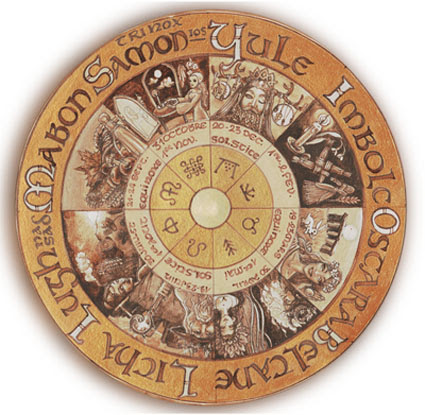
Samhain, or Halloween as it is now called, is a celebration observed in many countries on October 31, the eve of the Western Christian feast of All Saints' Day. It begins the observance of Allhallowtide, the time in the liturgical year dedicated to remembering the dead, including saints (hallows), martyrs, and all the faithful departed. The origins of Halloween customs are typically linked to the Gaelic festival Samhain. Samhain is one of the four cross-quarter days (the midpoint between two seasons) in the medieval Gaelic calendar. Samhain marked the end of the harvest season and beginning of winter or the 'darker half' of the year. It was seen as a liminal (or threshold) time, when the "veil" or boundary between the world of the living and the world of the dead is at its thinnest, making it easier to communicate with those who have left this world. It is also the season of divination, using the connection across the thin veil to ask the spirits for answers. Sunday, December 4, 2022
What is Taoism?
Philosophical Taoism, often represented by the yin-yang symbol, emphasizes living in harmony with the Tao (the Way), or Ultimate Reality, a presence that existed before the universe was formed and which continues to guide the natural world and everything in it. Tao is the ultimate source and way (or process) of nature and the universe. To live in harmony with the Tao is to go with the flow of life rather than against it. It is a way to conserve life's vitality by not expending it in the useless ways of friction and conflict. Early Taoists perceived that the ultimate nature of this mysterious force was beyond intellectual comprehension but could be discerned by the intuitive mind. The sages observed that through meditation, one could attain Tao or communion with the way of the universe itself.
Through meditation and other devotional activities, Taoists seek to bring their lives into accord with the Tao. They believe that by abiding in the Tao, or in harmony with the Cosmos, one may attain a state of such inner clarity and insight that all actions become synchronous and spontaneously correct. They refer to this state of harmony with nature and the universe as wu wei, or "non-doing." Non-doing is not a withdrawal from action, but rather the achievement of a higher kind of action: action in accord with the natural order. The concept of wu wei more closely suggests a way of existing without conscious effort, as nature does. Such a person knows what to do by abiding in a state of quietism, by letting go of all worldly thought so that the creative force of the Tao may enter their minds and bodies. Such accord with the Tao allows one to accomplish things without effort in a way that benefits everyone.
Taoism is an inner way as well as an outward path. One should outwardly "go with the flow" while inwardly adhering to one's true nature. Taoists seek to integrate inner and outer experiences while uniting body, mind and spirit into a harmonious whole. Taoism views humanity as a microcosm of the macrocosm we call the universe. Each human being is a hologram of the Cosmos, a weaving together of universal information from a particular point of view. Essentially, we are the universe experiencing itself in human form.
Taoists equate the body with the earthly realm, the mind with the human realm, and the spirit with the heavenly realm. By bringing the body, mind and spirit into accord, one transforms personal experience and influences the interactions of the three cosmic realms. Following the Tao is a journey requiring simplicity, balance and introspection. The lifelong quest of the Taoist is to identify their innermost purpose in life, and then use every means at their disposal to achieve it.
Sunday, March 27, 2022
Conflict and Unity: An I Ching Perspective
Sunday, August 1, 2021
Drum Divination
Sami drumheads are decorated with cosmological rune symbols and drawings of heavenly bodies, plants, animals, humans, and human habitations, sometimes divided into separate regions by horizontal or vertical lines. Sami drums are characterized by a central sun cross with arms protruding in the four cardinal directions. The cross symbolized the sun--the source of life. The terminal of the lower arm is often embellished, in many cases with a sort of (cave?) opening. This is, according to old descriptions, the starting position for the brass ring or antler piece placed on the drumskin when used for divination. The only other figures commonly found on this arm are the holy day men. These three figures (sometimes just one or two) are usually the most simplified of all human figures, frequently represented by simple crosses.
For divination, the drum is held horizontally with the drum face or table parallel to the floor. A metal ring or other kind of pointer is centered on the top of the drumhead. The drum is gently played with the drumstick so that the pointer moves across the drumhead, but does not fall to the floor. The diviner observes the movement of the pointer in relation to the symbols on the drum to interpret the answer. Detailed instructions on how to make and use divination drums can be found in Richard Webster’s book Omens, Oghams & Oracles: Divination in the Druidic Tradition.
Sunday, July 25, 2021
The Rhythm Archetypes
Line 6 __ __ drum—drum in white
Line 5 _____ drum dressed
Line 4 _____ drum all
Line 3 __ __ drum—drum the bride
Line 2 _____ drum comes
Line 1 _____ drum Here
Sunday, September 27, 2020
Great Power
When I consulted the I Ching regarding the state of our world today, I received Hexagram 34: Great Power. This hexagram symbolizes the truly great power of movement that is in accord with what is right and virtuous. It indicates that we must concern ourselves with correctness, for our character, attitude, and actions have a significant influence on others. The vital energy needed to accomplish great aims infuses the situation. Our influence at this time is significant and far-reaching. We must pay special attention to propriety and goodness, for any abuse of power can lead to downfall and chaos. We should pause before taking action and evaluate the appropriateness of our objectives. We would be wise to focus our attention on benevolent endeavors, for the power of our influence is directly proportionate to the merits of our efforts. Our success is directly proportionate to how persons we affect are benefited, or otherwise enhanced.
With such great power at our disposal, we must wait for the right time to speak or act -- when we are free of the pressures of the ego -- when we are in full possession of the inner truth of the matter. Everything we say or do proceeds from a sense of what is fair, just, and essential, and we rely on the power of good in others, trusting that their sense of truth will emerge to support what is right. We must be willing to trust that if we are sincere in trying to find the correct way, the power of good will come to our aid.
To help us find the correct way, it helps if we get to know our body better. Our body is our compass in the physical world. Both physical and emotional feelings are registered in the body. There is wholeness and grounding in this way of perceiving that is more reliable than the mind. The mind does not really produce any feelings. It chatters incessantly and shows images, but there is no true feeling in it. We feel the truth in our body. If we listen to the body's messages, it can guide us toward creating sustainable and lasting change.
When we perceive the correct way to go, we must not become obsessively lost in the forward thrust so that we lose our inner composure, for our ego waits for just such an opportunity. The ego can interject itself only if we become so absorbed in what we are doing that we lose touch with our inner being. Our true self is always objective, reticent and reserved. Awareness of this danger protects us from losing our inner balance, and from forgetting that right and justice must be accompanied by moderate thoughts and actions. Obstinately pressing for results creates more rather than less resistance. True greatness is the ability to possess power and not use it.
According to the I Ching, success is assured if we allow the clarity and strength of higher truth to guide our actions. As responsible human beings, let us affirm a world of peace, harmony and balance. Let us cultivate care for life and one another. See things as they are, in process of change, without fixation on imbalance; see the potential and call it forth.
Sunday, April 19, 2020
Divination and Adapting to an Evolutionary Pandemic
I consulted the I Ching today in order to gain some insight into the coronavirus pandemic that is spreading rapidly through much of the world. When I consulted the I Ching regarding the hexagram that best describes the pandemic, I received Hexagram 51, "The Arousing (Quickening, Shock, Thunder)." This hexagram consists of a doubling of the trigram Chen (the Arousing Thunder). Thunder rolls over Thunder, forming a state of Quickening. This hexagram symbolizes the unsettling events of fate that arouse us when we cling to belief or behavioral patterns that no longer support our growth. According to the I Ching, "Thunder repeated is the image of Shock. Thus in fear and trembling, the superior man sets his life in order and examines himself." The first thunder denotes fear and trembling, the second denotes shaping and exploring.
Just as the deep, reverberating sound of rolling thunder jolts the senses, so the universe may use a shocking turn of events to arouse us when we have gone astray. To weather the storm, we must retain our inner balance and utilize available energy in a sincere effort to set our life in order. Success depends on our willingness to plow old habits into the soil in order to cultivate new patterns that enhance our natural growth. If we disregard this imperative and persist in outmoded ways, we will experience repeated shock. Innovative change, on the other hand, will revitalize our life and precipitate renewed growth and creativity.
The process of adapting to COVID-19 is just beginning. Over time, the impact of the novel coronavirus may be so sweeping that it alters human rituals and behaviors that have evolved over millennia. This could change everything from the way we conduct our economy to our greeting and grieving rituals. Our earthly reality is in a state of Quickening that demands that the human species build our evolutionary powers of adapting on a scale equal to the magnitude we've seen in the coronavirus pandemic. As humans, we are being asked to go within and search our hearts in order to change those patterns of thought and behavior that work against us. It is necessary to still the mind and quiet the emotions so that inner knowing and intuition can emerge into our consciousness. Personal isolation and contemplation help us gain deeper insight and clarity of mind.
The shock waves that we are feeling indicate that usable energy is now available to change those patterns that inhibit our growth and create disharmony. When mankind chooses to live out of harmony with nature, nature too becomes inharmonious. That is what has happened in this case, and when this lack of harmony takes place, everything falls out of balance. This virus is the most recent example of this lack of balance. Global upheaval occurs when imbalances need to be corrected.
A global crisis often spawns innovation and cooperation. One of the wonderful things that happens during a natural disaster is that people cooperate with each other. That's how humans have always evolved in harsh conditions. This is a moment for us to prove our humanity, not run away from it. So, let us open our hearts to one another and let this be our finest hour. This turning point in human evolution still has much more to come. To gain insight into your path ahead, consult the I Ching.
Sunday, April 5, 2020
Soul Flight: A Spiritual Prescription for Coronavirus
Shamanism is based on the principle that innate wisdom and guidance can be accessed through the inner senses in ecstatic trance. Basically, shamanic journeying is a way of communicating with your inner or true self and retrieving information. Your inner self is in constant communication with all aspects of your environment, seen and unseen. You need only journey within to find answers to your questions. You should have a question or objective in mind from the start. Shamanic journeying may be undertaken for purposes of divination, for personal healing, or for any number of other reasons. After the journey, you must then interpret the meaning of your trance experience.
Drumming (or listening to a shamanic drumming recording) is a simple and effective way to induce this ecstatic trance state. When a drum is played at an even tempo of three to four beats per second for at least fifteen minutes, most novices report that they can journey successfully even on their first attempt. Transported by the driving beat of the drum; the shamanic traveler journeys to the inner planes of consciousness: the Upper, Middle, and Lower Worlds. You should always journey with a purpose, question or intention. Some good reasons to take a shamanic journey at this challenging time are….
1. To reconnect with your inner or spirit self: Shamanic journeying heightens the ability of perception and enables you to see into the deeper realms of the self. The moment you bond with your spirit is the moment your heart opens. The first time you glimpse your spirit self, you gasp and cry. You know who you are. That is the moment you begin to heal. Journey work reconnects us to our core, enhancing our sense of empowerment and stimulating our creative expression.
2. To clarify life purpose: When we are unaware of our soul's true purpose or simply not aligned in our actions, we often experience a malaise of the spirit. We can engage the blueprint of our soul path through the vehicle of journeying. Shamanic journeying is a time-tested medium for individual self-realization. We can journey within to access wisdom and energies that can help awaken our soul calling and restore us to wholeness. Journey work reconnects us with our deepest core values and our highest vision of who we are and why we are here. It heightens our sense of mission and purpose, empowering our personal evolution.
3. To access a higher power: Shamanism provides a secular approach to accessing a higher power. Shamanic methodology directly supports the introduction of spiritual factors found significant in the healing process. According to the American Journal of Public Health, "Shamanic activities bring people efficiently and directly into immediate encounters with spiritual forces, focusing the client on the whole body and integrating healing at physical and spiritual levels. This process allows them to connect with the power of the universe, to externalize their own knowledge, and to internalize their answers; it also enhances their sense of empowerment and responsibility. These experiences are healing, bringing the restorative powers of nature to clinical settings."
4. To divine information: You can journey within to obtain information about personal and community issues. Your helping spirits are a good resource when it comes to answering questions pertaining to relationships, health issues, or any issue. To divine information in a journey, begin with a clear question that you would like to ask of your helping spirits. Decide which of your helping spirits you would like to answer your question, and then journey to the place where you normally meet them in non-ordinary reality. Of course you can ask your question to as many of your helping spirits as you wish. When divining or healing on behalf of others, it is vital that you have their permission.
5. To develop relationships with the helping spirits who dwell in the three inner planes of consciousness -- the Upper, Middle, and Lower Worlds: Shamanism is a sacred call to build relationship with the caretakers in the unseen world who want to support the earth and her inhabitants at this time. These helping spirits might be the spirits of nature, animals, plants, the elements, or ancestors. The reason for developing personal relationships with spirit helpers is to gain wisdom, healing techniques, and other vital information that can benefit the community. Similar to the way friendships develop gradually, our relationships with spirits grow and deepen based on repeated interaction and building trust over time.
6. To reconnect with benevolent ancestors: Your ancestors and the collective spiritual power of all those who went before you reside in the spirit world. When your own time comes to pass on, you will become part of this vast collective unconscious. If you embark on a journey with the intention of connecting with those who have passed, they may come to meet you. Keep in mind that spirits choose to come into relationship with the person seeking. You can seek ancestral spirits, but the spirits must choose.
7. To prepare for death: Shamans believe that learning to leave the physical body is important, for without this experience, the soul may become confused after death and remain stuck in the Middle World. When a person dies, there is usually a smooth transition into the afterlife, but when a person suffers a traumatic death, they may not have an awareness of who and where they are. This makes it difficult for them to make their journey to the afterlife. Other souls linger in the space between life and the afterlife for fear of going to hell. Sadly, most of the psychopomp rites of passage that once helped prepare a person for death have disappeared. Hence, journeying is one of the most important shamanic skills that we can develop. By journeying to the Lower World, the place to which human souls travel upon physical death, we can prepare for our own death. That said, perhaps the most compelling reason to journey is...
8. To find ways to restore balance in the world: As anthropologist and author Felicitas Goodman points out, "One of the most pervasive traditions of shamanic cultures is the insight that there exists a patterned cosmological order, which can be disturbed by human activity." When harmony between the human realm and the original intended pattern is disturbed, the shaman makes a spirit journey to the Upper World to bring back the balance. Shamans also go there to acquire archetypal knowledge, to bring a vision into being, or to influence events in the material world. By interacting with the archetypes, the shaman interacts with their counterparts in the outer world.
Try a Shamanic Journey
To enter a trance state and support your journey, click here to listen to a track from my CD "Shamanic Journey Drumming." Reflect for a moment on the purpose of your journey, and then close your eyes. Focus your attention on the sound of the drum and feel yourself being carried away by the sound. If for any reason you want to return, just retrace your steps back. You will hear a call back signal near the end of the video, followed by a short period of slow heartbeat drumming to assist you in refocusing your awareness back to your physical body. Sit quietly for a few moments, and then open your eyes.
After the journey, you must then interpret the meaning of your trance experience. In some cases, your journey experiences will be clear and easy to understand. At other times, your journey may be dreamlike and full of symbolism. Interpret such journeys as you would any dream. Look for possible associations related to each symbol or image. The key is to observe whatever happens without trying to analyze the experience. Like developing any skill, journeying takes practice. Nothing may happen on your first journeys. You may only experience darkness. When this happens, simply try again at a different time. To learn more, read my article Shamanic Journeying.
Sunday, November 17, 2019
Divining the Way to Harmony
--Lao Tzu, author of the Tao Te Ching and founder of Taoism
Sunday, November 10, 2019
Five Books for Connecting With Power Animals
1. Medicine Cards: The Discovery of Power Through the Ways of Animals by Jamie Sams: Jamie Sams is a best-selling author and medicine teacher of Iroquois and Cherokee descent. I have used her unique and innovative divination tool since its publication in 1988 for guidance, insight, and help in finding answers to life's questions. The messages always clearly reflect whatever life situation I am going through at the time. This card-based divination system draws upon ancient wisdom and tradition to teach the healing medicine of animals. The deck of cards and book connect the natural attributes and behaviors of the animal with the native lore relating to each creature in a way that is both sensible and spiritual. The suggestions for introspection are evocative, and I find myself returning to them again and again.
2. Animal-Speak: The Spiritual & Magical Powers of Creatures Great & Small by Ted Andrews: Easy-to-read and understand, Ted Andrews's bestselling Animal Speak shows readers how to identify his or her animal totem and learn how to invoke its energy and use it for personal growth and inner discovery. Nature lovers will love this insightful compendium filled with touching stories about animals, natural history, and animal folklore. Readers will also learn magical animal rites and how to read omens of nature. Animal Speak includes a dictionary of bird, animal, reptile, and insect totems, which describe each creature's meaning. This bestselling guide has become a classic reference for anyone wishing to forge a spiritual connection with the power and wisdom of the animal world.
3. Bird Medicine: The Sacred Power of Bird Shamanism by Evan T. Pritchard: Evan T. Pritchard is a descendant of the Mi'kmaq people (part of the Algonquin nation) and the founder of The Center for Algonquin Culture. Pritchard's scholarly and illuminating book is based on his field interviews with people in the Native community on birds as teachers, guardians, role models, counselors, healers, clowns, peacemakers, and meteorologists. They carry messages and warnings from loved ones and the spirit world, report deaths and injuries, and channel divine intelligence to answer our questions. Bird Medicine is a treasure trove of ornithological insight and indigenous wisdom. It provides numerous examples of everyday bird sign interpretations that can be applied in your own encounters with birds as well as ways we can help protect birds and encourage them to communicate with us.
4. Power Animals: How to Connect with Your Animal Spirit Guide by Steven D Farmer: Dr. Steven Farmer is a psychotherapist, shamanic healer, and the author of several best-selling books. In Power Animals, Dr. Farmer guides you through a journey on the accompanying audio download to connect with your power animal. Once you meet your power animal, you can refer to the text to learn what this says about you and read a channeled message for you from that animal spirit. This is an easy-to-read introduction to the concept of power animals, and provides descriptions on 40 different animals. It's clear, insightful, fully developed but not overly wordy, and all of it is helpful.
5. Animal Spirit Guides: An Easy-to-Use Handbook for Identifying and Understanding Your Power Animals and Animal Spirit Helpers by Steven D Farmer: After the publication of his book Power Animals, many readers inquired about the meaning of power animals that were not contained in that work. In Animal Spirit Guides, Dr. Farmer provides concise, relevant details about the significance of more than 200 animals that may come to you in physical or symbolic form as guides and teachers. He lists three things for each animal: 1) if the animal shows up, what does it mean, 2) when you should call on the particular animal that you are reading about, and 3) if the animal is your power animal what does it mean. This makes the information very concise and easy to find and understand. It is an excellent reference book to have on the shelf.
Sunday, March 4, 2018
The Tao of Drumming
From a rhythmic perspective, the I Ching offers and represents a "Tao of Drumming." The I Ching is an ancient Chinese text and divination system. It is the wellspring of Chinese thought, stressing the connection between humanity's destiny and the natural world. Philosophically, it describes the universe as a single, flowing, rhythmic being, and all things in it in constant cyclical change. Everything is t'ai chi -- one universal energy, which expresses itself as two polarized yet complementary aspects, yin and yang. Yin and yang ebb and flow, creating the cycles and rhythms of life.
By observing nature, the sages perceived all of the rhythms and energy patterns that arise from the interaction of yin and yang. They then coded these rhythmic patterns into a "book of life." The I Ching's sixty-four hexagrams represent a code or program of the operating principle of life itself. Each six-line configuration is the visual representation of a rhythm archetype. The image pattern of each hexagram generates a particular drum pattern based on the sequence of the yin and yang lines. Each rhythmic pattern pulsates a particular resonance, which stimulates, works with, and informs the body, mind, and spirit in the most optimal manner for effecting change or harmonizing with change.
The drummer may then utilize the I Ching as a gauge, a precise means for placing oneself in relation to the pattern or way of cyclical change, and that way is known as Tao. It is a guide to harmony and balance and the drum is the instrument of attunement. It is a pathway to the "infinite Tao," the unknowable force that guides the universe and everything in it. Through the beat of the drum, anyone can resonate in harmony with the eternal rhythm of Tao. To learn more, look inside my book I Ching: The Tao of Drumming.