Sunday, July 17, 2022

Words Are Monuments

A national reckoning with American history and racial injustice has been playing out on the terrain of monuments, museums, school curricula, and increasingly -- maps. While the Department of the Interior plans to rename 660 place-names with the derogatory term "sq**w," a new study published in the journal People and Nature shows that misogynist and racist slurs are the tip of the iceberg. Violence in place-names can take many forms, including the erasure of Indigenous knowledge and languages.
 
Titled "Words Are Monuments," the study reveals a system-scale pattern of place-names that perpetuate settler colonial mythologies, including white supremacy. Through a quantitative analysis of 2,200 place-names in 16 National Parks, researchers identified:

• 10 racial slurs

• 52 places named for settlers who committed acts of violence against Indigenous peoples. For example, Mt. Doane, in Yellowstone, and Harney River, in the Everglades, commemorate individuals who led massacres of Indigenous peoples, including women and children.

• 107 natural features that retained traditional Indigenous names, compared with 205 names given by settlers that replaced traditional names found on record.

While the Department of the Interior has established a task force to address derogatory place-names, the agency has faced some criticism for what Washington State officials and area tribes are calling a rushed process, with proposed replacement names that are largely colonial.

Calls to re-Indigenize place-names in national parks and monuments have been gathering steam, from the Blackfeet Nation's recent petition to return traditional names to mountains in Glacier National Park, to the Puyallup Tribe's campaign to rename Mount Rainier to Təqʷuʔməʔ, or Mount Tahoma.
 
A new website and national campaign inspired by these efforts and the place-names study launches today at WordsAreMonuments.org. Created by the pop-up social justice museum The Natural History Museum, the site features an interactive map with stories from problematic place-names cited in the study; a step-by-step guide from the National Association of Tribal Historic Preservation Officers on how to officially change place-names; video interviews with cultural geographers and Tribal leaders; and ways to take action to support renaming campaigns.
 
The Natural History Museum will also host a free series of online events featuring Indigenous leaders, artists, activists and scholars that explores:

• Why place names matter and how the movement to 'undo the colonial map' relates to other movements that reckon with American history -- to topple Confederate and colonial monuments, decolonize museums, and overhaul school curricula;

• The relationship between language and ideology, and the power of place names in encoding a way of seeing, understanding, and relating to the land;

• How campaigns to re-Indigenize place names on federal lands are not just about making public lands more inclusive, but are stepping stones on the path to Indigenous co-governance and land rematriation;

• The global reckoning with colonial and imperialist history, including successful and ongoing efforts to replace colonial place-names in New Zealand, India, Palestine, South Africa, and beyond.

Sunday, July 10, 2022

Pilgrimage in the Modern World

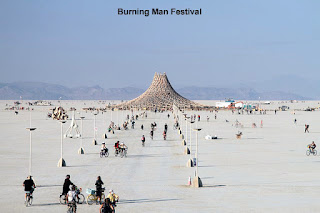
Every year, thousands of pilgrims gather at the Neolithic Stonehenge monument in Wiltshire, England to celebrate the summer solstice. Thousands more trek to Nevada's Burning Man Festival to burn a towering effigy and the hopeful ill journey to Lourdes, France seeking a cure as they have for centuries. Although pilgrimage may seem an antiquated religious ritual, it remains a vibrant activity in a modern world of gadgets and instant gratification. As increasing numbers of us seek refuge from the demands of modern life and its electronic distractions, venturing to a sacred place in search of spirituality has never seemed more appealing. That pilgrimage continues to exercise such a strong attraction is testimony to the power it continues to hold for those who undertake these sacred journeys.
 
Pilgrimage is broadly defined as an outward journey of a religious or spiritual nature, typically to a shrine, temple, site or rite of significance to those of a particular faith or belief system. There are pilgrimages associated with all the world's spiritual traditions. Perhaps best known is the Hajj, an annual journey to Mecca considered one of the five pillars of Islam. Another famous pilgrimage is the Camino de Santiago, a journey made by Christians to the shrine that houses the remains of the apostle Saint James in Galicia in northwestern Spain. Jews make pilgrimage to the Temple Mount in Jerusalem, while Tibetan Buddhist, Hindus and Jains circumambulate Mount Kailash, the holiest mountain in the Himalayas. Every 12 years, Hindus in India gather at one of four sites along the Ganges river in what is known as the Kumbh Mela, considered the single largest gathering of human beings in one place on the planet.
 
The purposes for undertaking a shamanic or religious pilgrimage traditionally range from fulfilling a spiritual vow, finding or deepening one's faith, seeking a remedy for physical or spiritual problems, requesting guidance from spirits or deities of Nature, undergoing initiation rituals, paying homage, to realigning with one's innermost purpose and passion. For many, pilgrimage is a way to mitigate and resolve karma, the sum of a person's actions in this and previous states of existence, viewed as deciding their fate in future existences. Undoubtedly pilgrimage benefits those best equipped to receive its effects, pilgrims with a developed meditation ability, an unfolded responsiveness to the inner world and a receptive vision.
 
Since ancient times, sacred sites have had a mysterious allure for billions of people around the world. Legends and contemporary reports tell of extraordinary experiences people have had while visiting these places. Different sacred sites have the power to heal the body, enlighten the mind and inspire the heart. A growing body of evidence indicates that there is indeed a concentration of holiness at pilgrimage places, and that this holiness or field of energy contributes to a wide variety of beneficial human experiences. The value and benefit of pilgrimage is often only revealed long after the physical journey is over. The pilgrimage never ends. To learn more, look inside The Art of Pilgrimage: The Seeker's Guide to Making Travel Sacred.

Sunday, July 3, 2022

"The Shamanic Drum" July eBook Sale

Mark your calendar! I am taking part in the 14th annual Smashwords July Summer/Winter Sale, taking place Friday, July 1 through Sunday, July 31 2022. For the entire month of July, all of my ebooks are 50% off list price: The Shamanic Drum: A Guide to Sacred Drumming, I Ching: The Tao of Drumming, Shamanic Drumming: Calling the Spirits, Shamanic Drumming Circles Guide, The Great Shift, Riding Spirit Horse: A Journey into Shamanism and Shamanic Journeys: An Anthology. Choose from multiple file formats including .epub, .mobi for Kindles, and PDF. Click on the following link to my Smashwords author page and you will receive the 50% discount automatically by adding my books to your cart: Smashwords July Summer/Winter Sale.
 
Why does Smashwords call it "Summer/Winter"? Here in the Northern hemisphere, it's mid-summer. Readers are loading their e-reading devices for summer beach reading and long-awaited vacations. South of the equator, readers are now in the middle of winter. They're ready to curl up in front of the fireplace and enjoy a great read too! Smashwords is the world's largest distributor of indie ebooks. They make it fast, free and easy for any author or publisher, anywhere in the world, to publish and distribute ebooks to the major retailers and thousands of libraries. The Smashwords Store provides an opportunity to discover new voices in all categories and genres of the written word.